Zahhak and the Serpents
ضحاک
The devil asked to kiss his shoulders. Something grew where the lips had been.
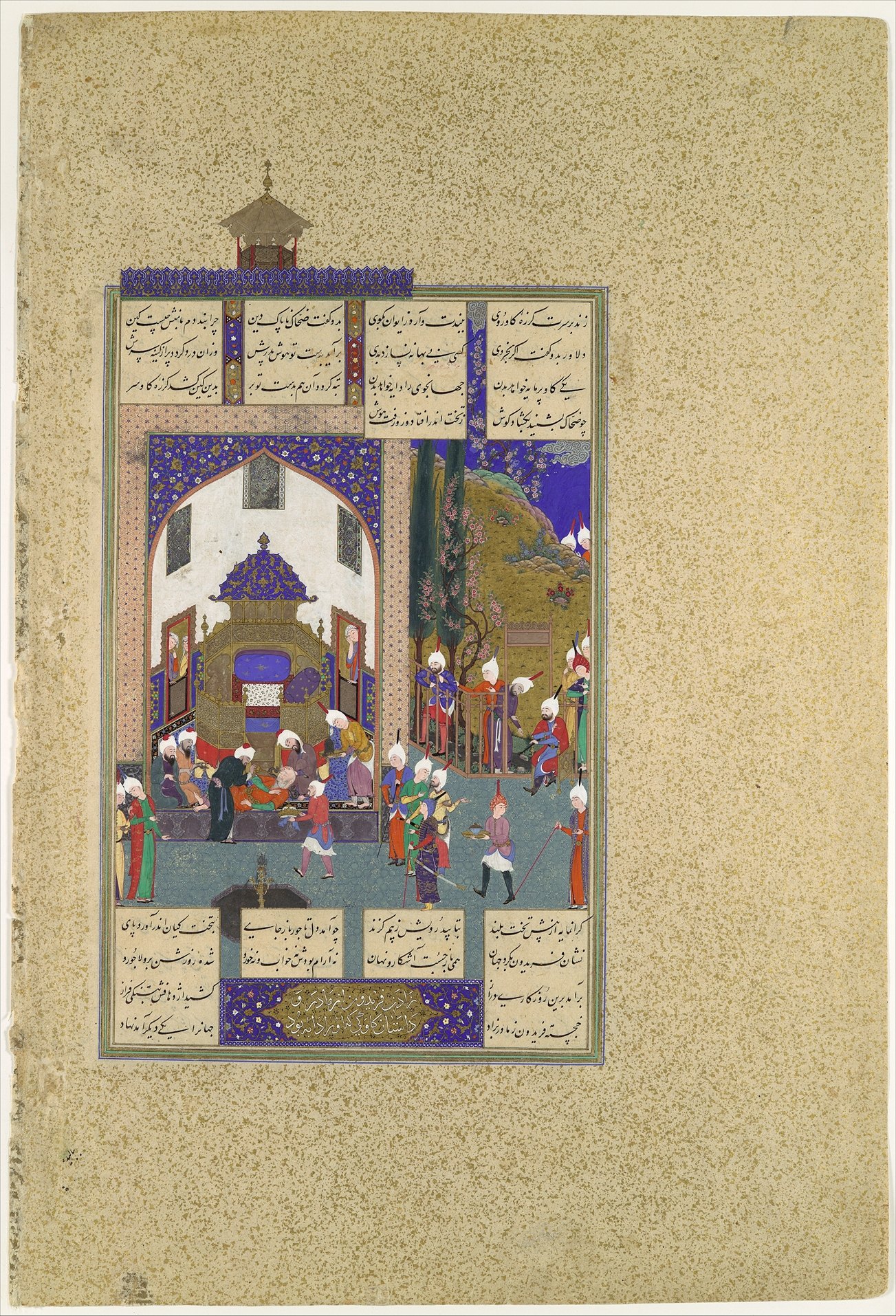
A young Arab prince named Zahhak is befriended by a charming stranger who is the devil in a good coat. The stranger talks him into murdering his own father, and then, as a reward, asks a small favour: to kiss him on both shoulders. Zahhak agrees. The stranger vanishes, and out of each shoulder a black serpent grows.
They are cut off; they grow back. Every doctor fails. Then the devil returns, disguised now as a physician, with the only prescription that will keep the serpents quiet: feed them human brains. Two young men, every day, for as long as Zahhak lives.
He lives a thousand years. He takes Iran from Jamshid and has him sawn in two, and for ten centuries the kingdom's mornings begin with the same arithmetic: whose sons, which street, which door the soldiers stop at.
Why it matters
The epic's opening argument about power: tyranny is not a monster that arrives from outside, it is an ordinary man who accepts one favour and then needs a daily supply of other people's children to stay comfortable. Zahhak is still the word Iranians reach for when they name a despot.