Kaveh's Apron
درفش کاویانی
A blacksmith had lost seventeen sons. They came for the eighteenth.
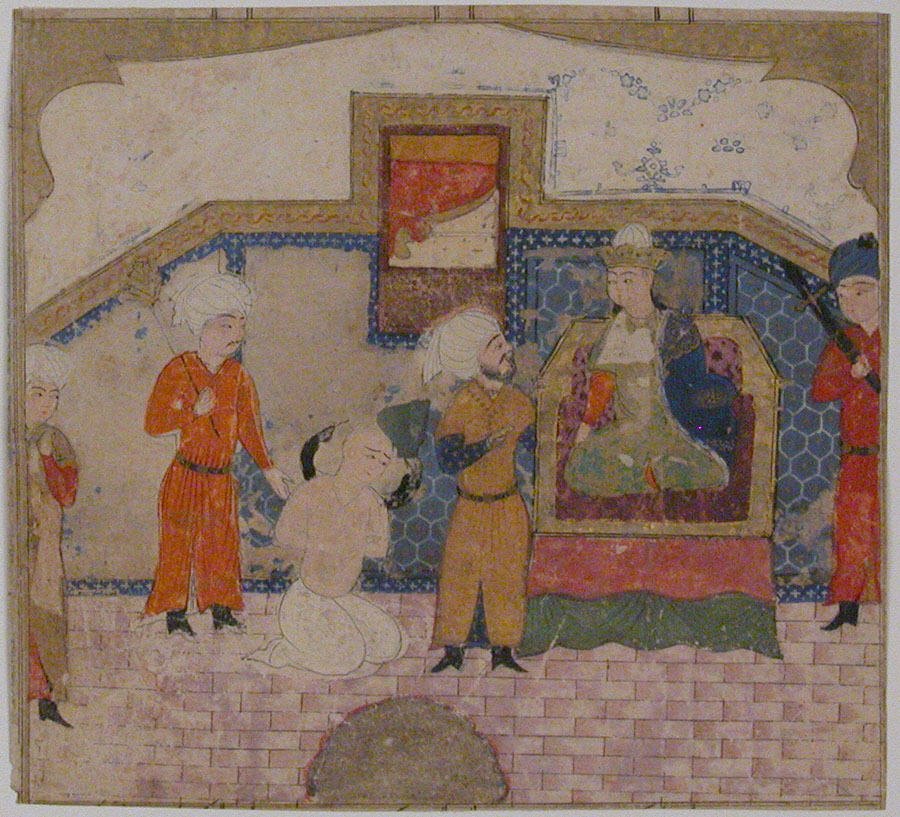
Zahhak, frightened by a dream, has his courtiers draw up a document attesting that he is a just king. It is being signed in open court when a blacksmith forces his way in, shouting. His name is Kaveh. The serpents have eaten seventeen of his sons. The soldiers have just taken the last one.
The king, wanting the scene over, gives the boy back. Then he asks Kaveh to sign the document. Kaveh reads it, asks the court whether any of them believe it, and tears it to pieces in front of the throne.
He walks out into the street, puts his leather apron on the end of a spear, and raises it. People follow the apron. It becomes the banner of the rebellion that finds Fereydun and puts him on the throne. And for the rest of Persian history, the Derafsh-e Kaviani, the standard of the kings, is a blacksmith's apron on a stick.
Why it matters
The founding image of Persian resistance, and a strikingly modern one: the tyrant's legitimacy collapses not in battle but the moment one working man refuses to sign the paper. The apron outlasts every dynasty in the poem.