Siyavash Rides Through the Fire
گذر سیاوش از آتش
Accused by the queen, he offered to prove it in the only way the court would accept.
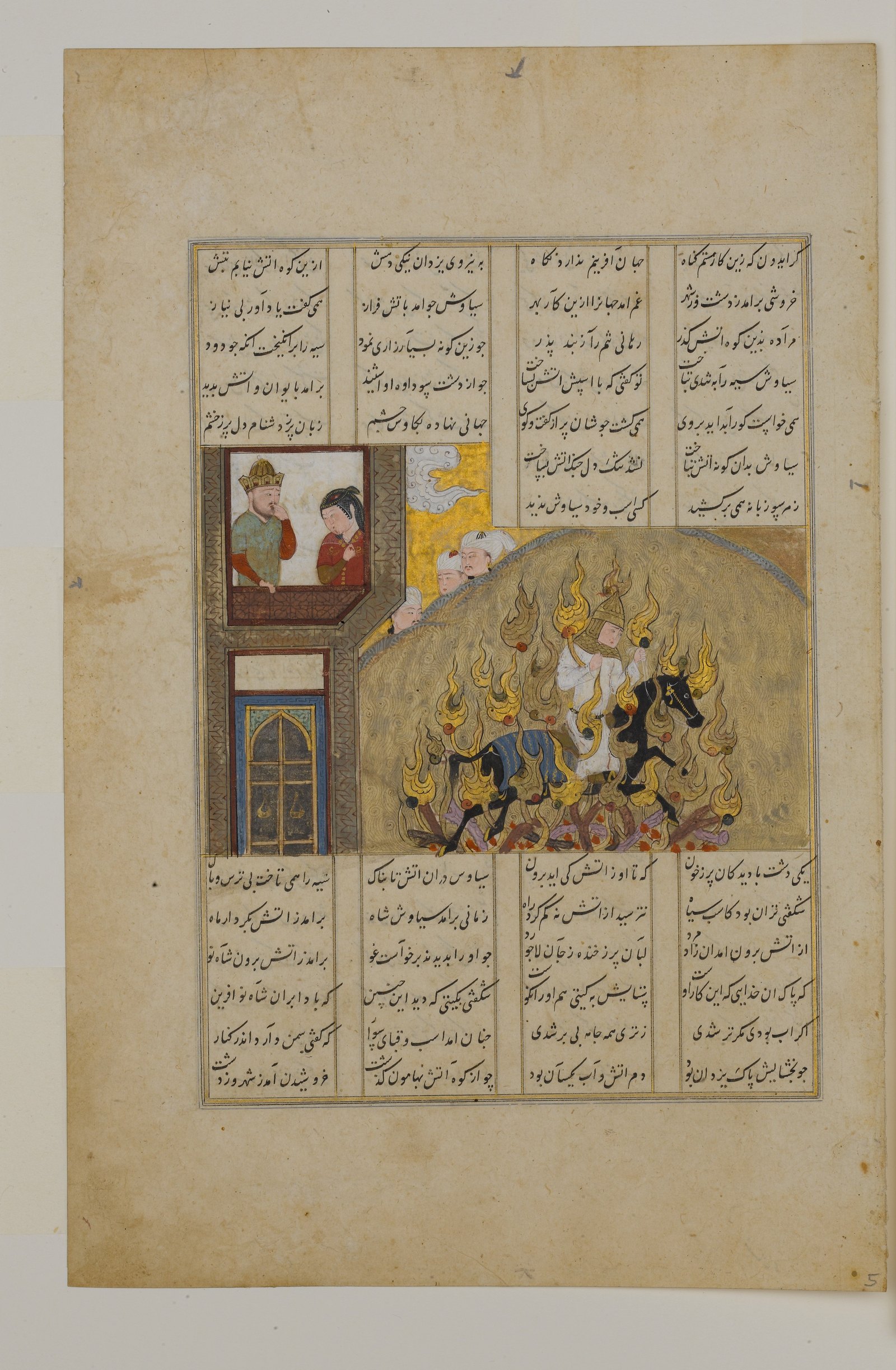
Sudabeh, Kay Kavus's queen, wants her stepson Siyavash. He refuses her, carefully and repeatedly, trying to leave her a way out. She does not take it. She tears her own clothes and tells the court he attacked her.
The king believes his son and cannot say so publicly. So the court settles it the old way: two mountains of firewood are built with a lane between them and set alight, and Siyavash rides into it on a black horse in white clothes.
He comes out the far side unmarked, not even the smell of smoke on him. He is innocent, everyone can see it, and it saves nothing. His father's court is now a place where this can happen to him, so he takes a command on the frontier, and then, rather than break a peace treaty his father orders him to break, he crosses into enemy country and asks Iran's greatest enemy for asylum.
Why it matters
Siyavash is the poem's one uncompromised man, and the fire is the image of that: he is vindicated in public and destroyed anyway. His murder in Turan sets off a war that runs for two full reigns and thousands of verses, and Persian mourning traditions still carry his name.