Rostam and Sohrab
رستم و سهراب
Two champions fight for three days without ever exchanging names.
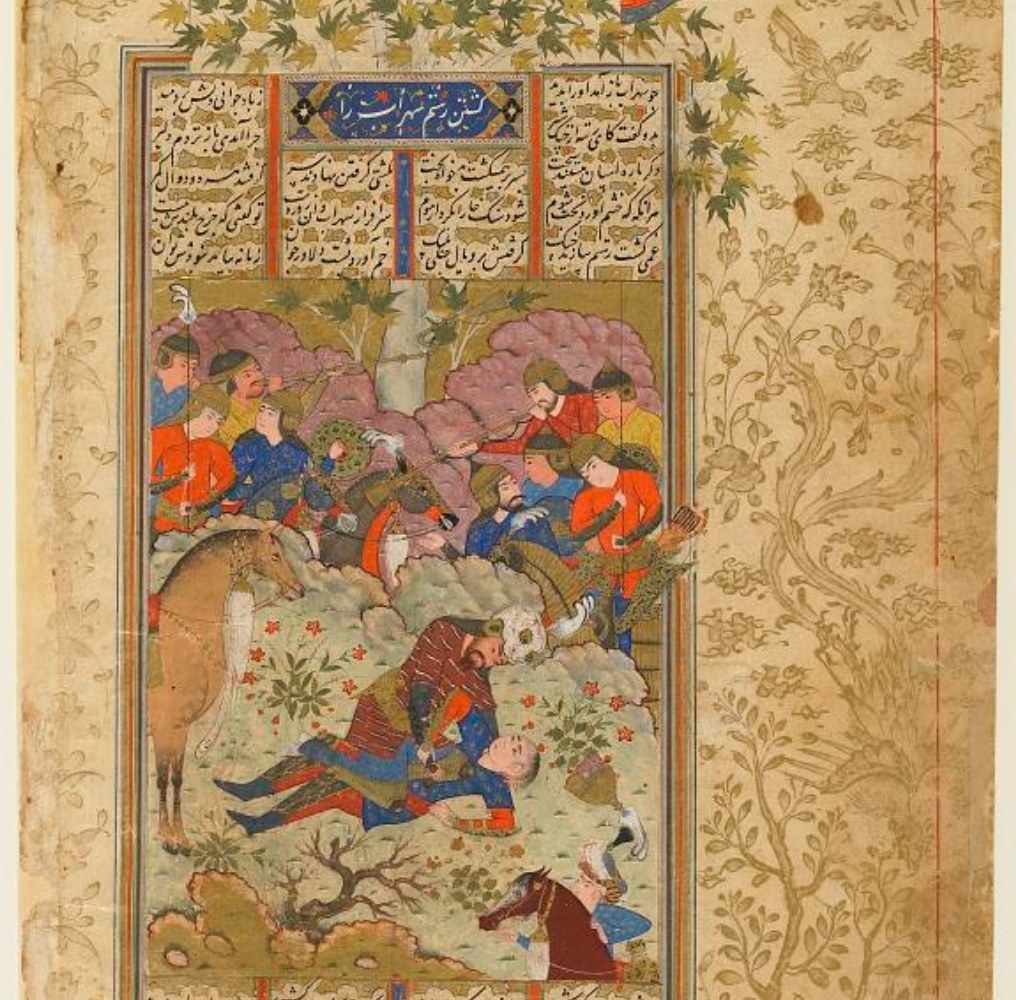
Rostam, travelling, spends one night with Tahmineh, a princess of Samangan, and leaves in the morning with an arm-clasp he tells her to give the child if it is a boy. It is a boy. She never tells Rostam, and she never tells Sohrab who his father is, because she knows that if he finds out, he will go looking.
He finds out anyway. Sohrab grows enormous and terrifying inside a few years and marches on Iran with a Turanian army, for one reason: to find Rostam, put him on the Iranian throne, and rule the world alongside his father. Rostam, called out to face the young champion nobody can beat, does not know who he is fighting. Sohrab suspects, and asks him twice, and is lied to, because Rostam has learned never to give his name to a man who might beat him.
They fight for three days. On the third Sohrab has him pinned and lets him up, because that is what he has been taught a hero does. Rostam pins him next, and does not. It is only when the knife is in that he sees the arm-clasp.
Why it matters
The most famous passage in Persian literature, and one of the great tragedies in any language. Matthew Arnold's version made it a Victorian fixture in English. Note what Ferdowsi refuses to do: no god arranges this, no prophecy demands it. It happens because a man was cautious and a mother was frightened.