Rostam and Esfandiyar
رستم و اسفندیار
Two men who like each other, ordered into a fight neither one wants.
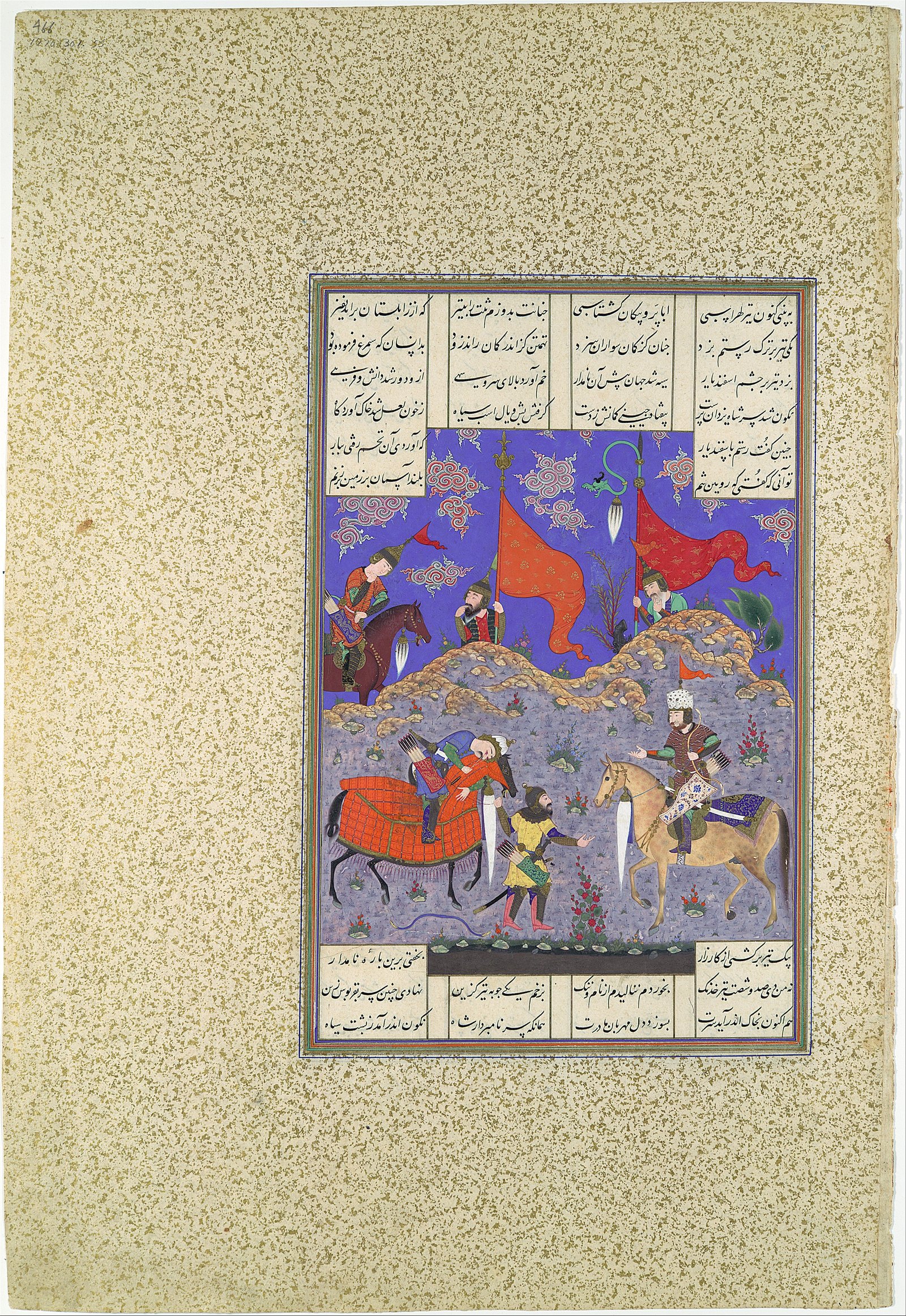
Goshtasp has promised his son Esfandiyar the throne and keeps not handing it over. The final condition is designed to kill him: go to Sistan and bring Rostam back to court in chains.
Esfandiyar knows exactly what his father is doing. He goes anyway, because he will not disobey a king. Rostam, ancient by now and the man who has held Iran together for centuries, offers him everything short of the chains: hospitality, honour, an escort to court, any face-saving formula either of them can invent. Esfandiyar cannot take any of it. The chains are the order.
So they fight, and Rostam cannot win: Esfandiyar was made invulnerable by Zoroaster. Beaten and bleeding, Rostam withdraws to his father, and it is Zal who burns one of the Simorgh's feathers. The bird comes, closes their wounds, and tells them the one thing that will work: a branch of tamarisk, cut and worked a certain way, loosed at the eyes. He begs Esfandiyar one last time to walk away. Then he shoots him. And the dying man makes Rostam guardian of his son, which is how Rostam's own house is eventually destroyed.
Why it matters
Ferdowsi's masterpiece of moral difficulty, and the passage Persian readers argue about most. Both men are right. Neither can move. The killing is done with a magic weapon by the character who has spent the whole poem not needing one, and it ruins him.