Kay Khosrow Walks Into the Snow
رفتن کیخسرو
He won everything, and then decided that was the danger.
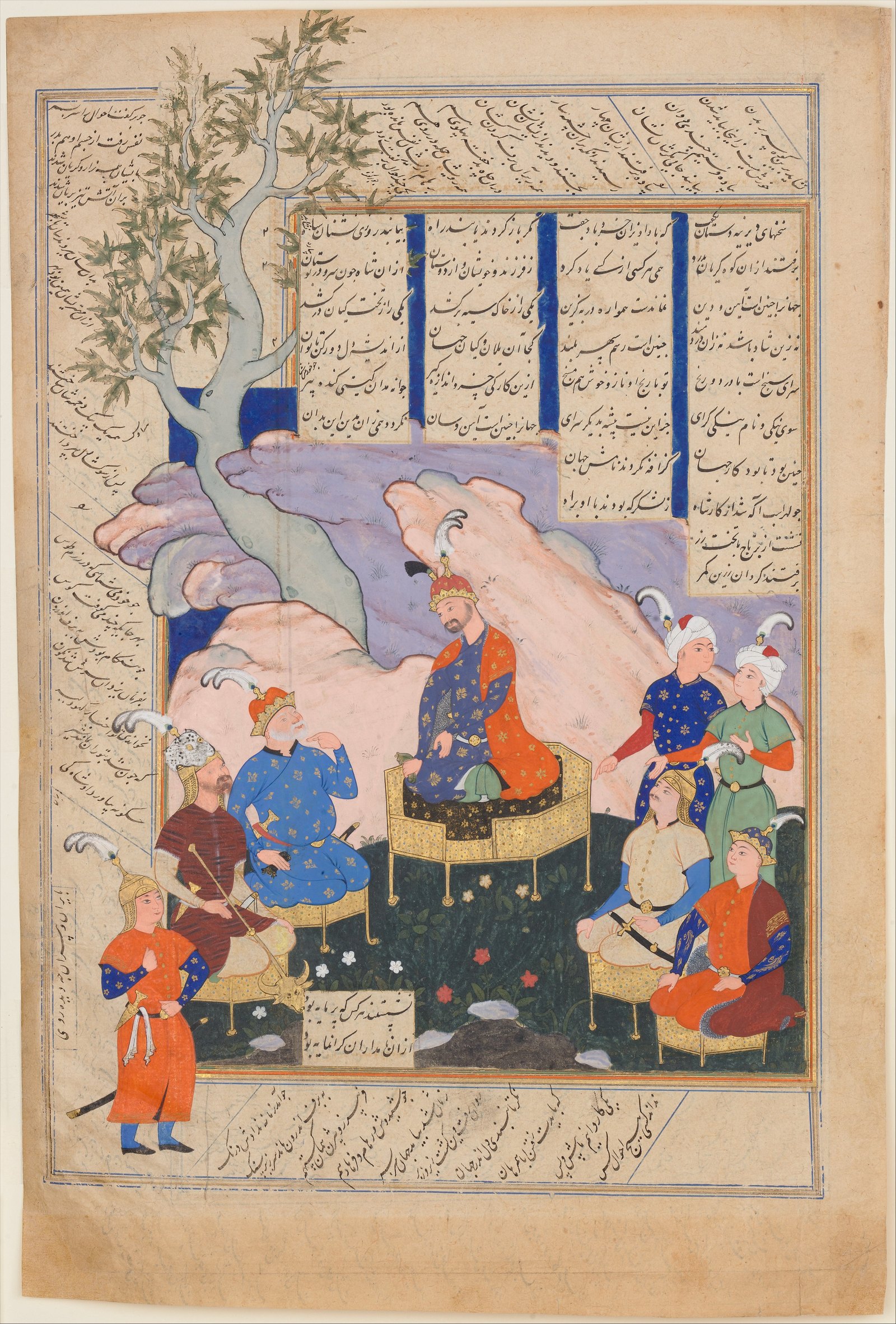
Kay Khosrow spends his reign completing the vengeance he was born into: the war against Turan for his father Siyavash, which consumes a generation of champions on both sides and ends with his own grandfather Afrasiyab executed.
And then, at the height of it, with the enemy destroyed, the empire whole and the treasury full, he stops. He shuts himself away for weeks. He has watched what victory did to Kay Kavus and what vengeance did to everyone who carried it, and he has concluded that a king who has everything is one step from becoming Zahhak.
So he divides the kingdom, names his successor, and walks up into the mountains in the snow with a handful of his oldest companions. He warns them to turn back. Some do. The ones who follow him past the spring are never found.
Why it matters
The most philosophically strange thing in the epic and its quiet answer to Zahhak: the only king who ends well is the one who recognises what unlimited power was about to do to him and abdicates from the world entirely. Nothing in Homer or the northern epics does this.