Zal and Rudabeh
زال و رودابه
She was descended from the tyrant. They were told no by everyone, and did it anyway.
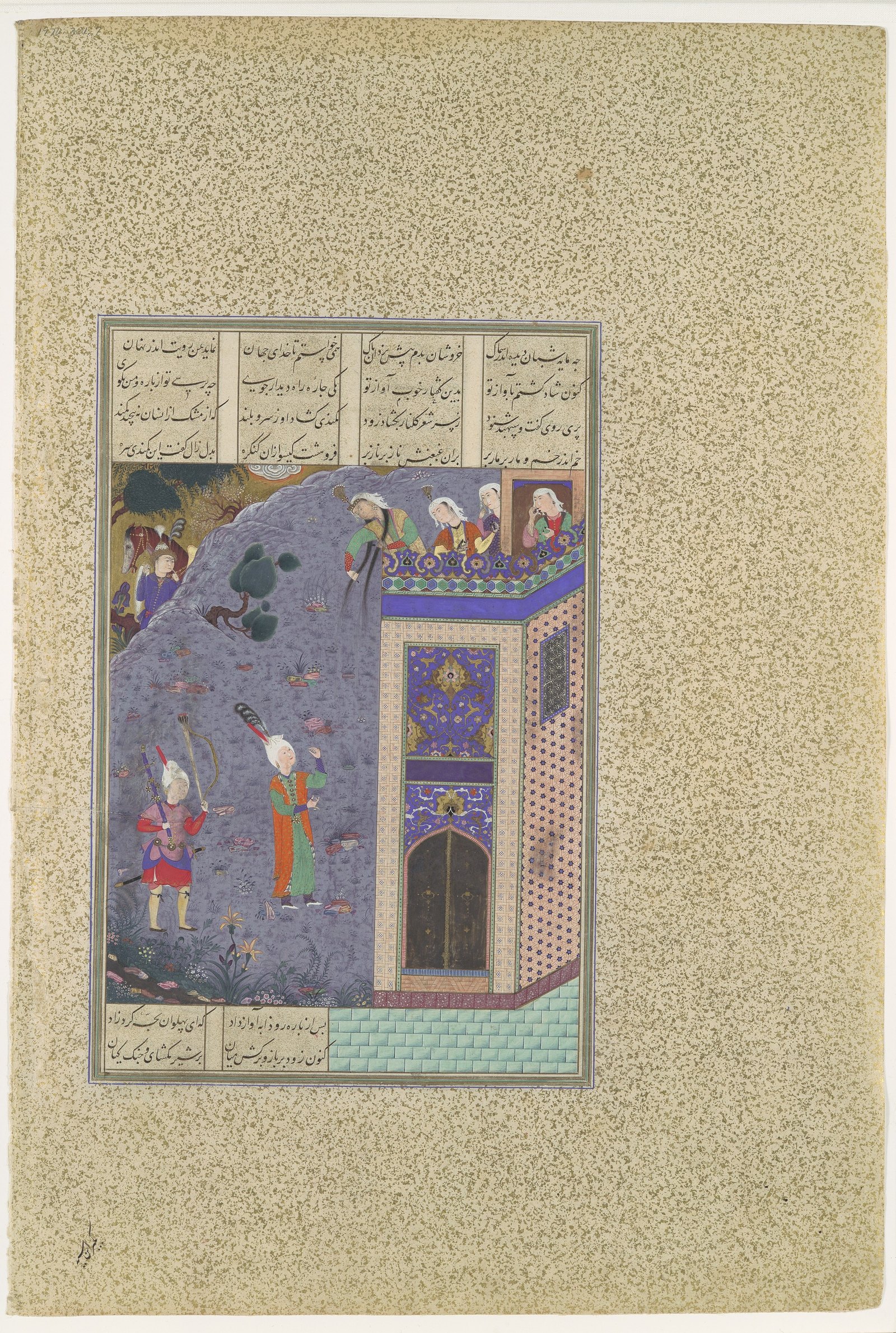
Zal hears about Rudabeh, the daughter of the king of Kabul, before he ever sees her. She hears about him the same way. By the time they meet, both have decided.
The problem is her blood: Kabul's royal line runs back to Zahhak. No Iranian champion can marry into the family of the serpent king. Zal's father objects, the king of Iran objects, her own father threatens to kill her.
They go around all of it. She lets her hair down from the tower wall for him to climb, and he tells her to stop, and uses a rope. Then they wear the objections down: letters, envoys, a formal examination in which the court's priests put riddles to Zal and he answers every one, and a reading of the stars promising that this marriage will produce the greatest warrior the world has seen. Which it does. They name him Rostam.
Why it matters
A genuine love story in the middle of an epic about war, and the poem's argument that the great hero comes from the union everyone tried to forbid: half Iranian champion, half the blood of Iran's worst enemy.